
By Conor O’Neill
Self effacing North Antrim folk singer/songwriter Aaron McMullan’s LP biographies sees himself stating he’s ‘the master of the self-sabotaging bio’ blurb’. Behind this modest demeanour McMullan is one of the most original and diverse songwriters I’ve come across in a long time.
His latest album, Swing Hosanna, Sing The Salt is as eclectic as it is intense and hypnotic. Culture Crush NI caught up with McMullan to try to get to the bottom of the turmoil, intrigue and dry wit his back catalogue whispers and screams. I found him to be witty, articulate and a strange mixture of confidence and self doubt. Interested? Read on.
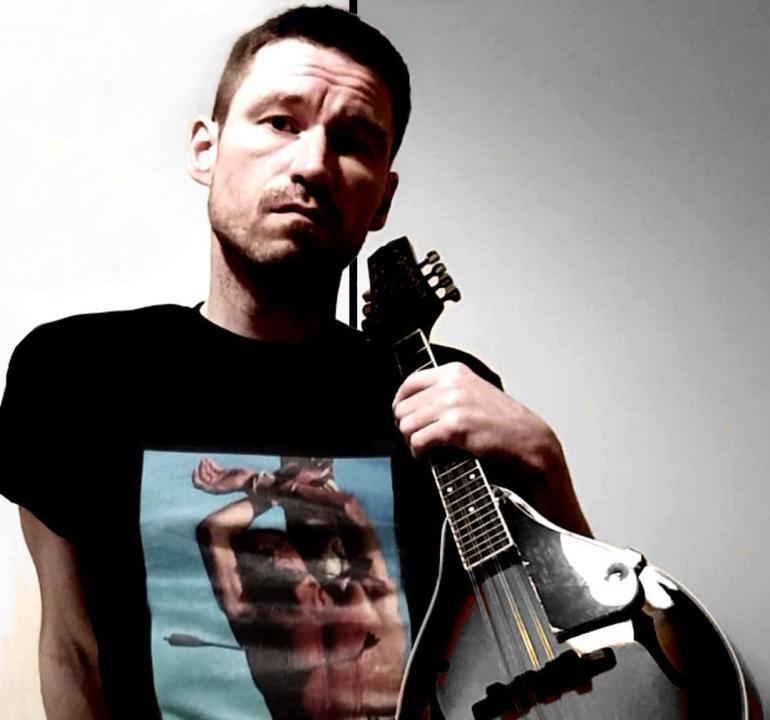
CC: Do you come from a musical family?
AMcM: “There was always music about the house, maybe more so than other places. When I was growing up my father played in a country band. He played guitar, there was always instruments about the house. My mum also worked in a music shop, there was all the stuff I’d be looking for, I remember music being a big thing. I guess it was also a matter of timing, there was Top Of The Pops on TV and my sister had quite a big vinyl collection which included everything from the Grease soundtrack to soft rock like Vixen and Bon Jovi.
“My brother also played guitar. I idolised him growing up. He had an electric guitar and was into music like metal, southern rock and Prince. I remember when I was still in primary school I started wearing Iron Maiden T-shirts, much to my mum’s dismay, so I suppose I had quite an interesting musical background. I think there’s probably more music for kids today what with TikTok and Spotify but when I was young music seemed to be a lot more focused.”
CC: What band or artist made you first pick up the guitar?
AMcM: “Once I started getting into metal bands I started drawing album covers but it was a long time before I started thinking I could make music. I think it was about 1994 when I first heard Green Day’s Dookie. I remember hearing it and thinking, ‘I’m going to bring friends around and play them this album’, it felt like something I could do. It never occurred to me there was anything standing in my way. It was pop, it was punk and they made it sound so very easy.
“The first song I really knew how to play, and I think this is pretty common for kids around that time was Oasis’ Don’t Look Back In Anger. I missed out on a couple of the more difficult chords like the F’s but I could play along to most of it. I wasn’t really that interested in the whole Britpop thing but we had a music teacher who saw that a lot of people at school were interested in that sort of stuff and taught us the chords. I was never really into learning covers, once I knew a few chords I started writing my own stuff.”
CC: What’s your approach to songwriting?
AMcM: “At the moment my memory isn’t the best and I hope it’s just a temporary thing, so in terms of recent material, I’ll just be playing about with something and then it’ll go off on another direction. I’ll get a basic melody and the song will arrange and then rearrange itself. “A lot of the time I’d go back to maybe a verse or something from 2008 and add it to a new song. Maybe something I hadn’t finished or had overlooked. It’s all pretty unorganised. There’s song I’ve written recently and I had the words first and then got the rhythm on the guitar, that song ended up being over 18 minutes long. I won’t be going out in that form but it’s something to work with. I’m struggling to remember how I wrote it.”
CC: Your album Yonder Calliope was released in 2007, you would have been about 26-years-old then, do you think songcraft gets easier as you get older or does knowledge impede the freedom of a songwriter?
AMcM: “I was a lot more prolific back then, that’s why to this day if I find myself getting stuck I’ll look back to older stuff. How that LP came about was I was blogging quite a bit back then around 2005 and I was releasing stuff but never as a full album. I was recording stuff in my folk’s kitchen and I had about 40 songs. I picked a few and they ended up on that album.
“Now I’m much more conscious of things. Back then, though I wouldn’t have said it at the time, I was definitely more free and spirited. I did have this strict punk rock rule about doing everything in one take, but I think that’s because I was frightened of people finding out that if I were to do a fifth or sixth take it wouldn’t be any better. Now I try not to out too much direction on a track or guide it too much. I tend to go back more and think, ‘I’ll sort that out later, or I’ll trim that part. I’m pushing things into places where I’ve maybe always wanted them to go.”
CC: Religion and iconography play a big part in the themes of your songs, album titles and LP covers, were you brought up in a particularly religious family, and are you religious now?
AMcM: “We are where we are. We’re going to be confronted with it whether we like it or not. The iconography is not in the religion I grew up with, maybe that’s why I like it now because it’s weird and new to me. It used to be something that gave me the chills but now there’s something in it that I respond to it in a certain way. It’s something about the beautiful suffering that I respond to. I love baroque art and renaissance paintings. I love the darkness. The things that get to me are things you can get really close to but at the same time they’re gesturing to something that you’ll never be able to understand.
“I love going to Catholic churches, they have different art. Some of it is really visceral and I think, ‘God, I feel that!’ but you look into the eyes and think, ‘I will never understand that’. It’s fascinating to me. I feel lucky that I seriously started writing songs that were my sort of songs. Around 2005 was the time when those kinds of songs started happening. Then I had a period of sobriety. I had a lot of trouble with alcohol and other things like that. I was in recovery groups and I had that sort of martyr thing that thankfully was completely knocked out of me.
“I once gladly bought into the idea that there was something right about my suffering but by the time I was writing about things I had gone through I had no time for any of that. I would take the legs from under it and there’s lot of the ‘taking the piss’ out of myself in my work. I do think I’m quite often misunderstood when actually I’m just trying to express myself.
“The other thing about the religious themes to my music was that I’d come round to reading the Bible, especially the King James version. I’m not religious as in having a string faith but I am obsessed with engaging with the bible. Not from a belief point of view but how things often chime politically. If you were to take things from a fundamentalist point of view you’d pack your things up and abandon the typical nuclear family. To me the message is to judge a tree by its fruit.
“There’s so much with Northern Irish religion that I couldn’t resolve. The whole thing was rotten to me, and it’s all there in my musical development. Some of my earliest memories musically is people suffering quite beautifully. I’m talking about Freddie Mercury, there’s something achingly beautiful about his performance for the video of The Days Of Our Lives where he does that farewell thing. I saw that and it stuck with me. Then Kurt Cobain died not long after and then Richie Edwards [Manic Street Preachers’ lyricist and guitar player] disappeared, so there is a whole lot of that kind of beautiful, elevated people going on. Musicians as martyrs used to be important to me but now the whole ‘tortured artist’ stereotype is really suspicious.”
CC: Mental health issues and drug references also play a major part of your lyrics, have you resolved those issues or are you still dealing with them?
AMcM: “I’m in a place of recovery. I got sober in my 20s. Between the first album and the second one I fell off the wagon and it was a long time before I got back on it. I’ve been sober for quite a few years now. I do have a mental health disorder, I’ve been diagnosed with schizoaffective disorder which is basically the worst bits of schizophrenia and bipolar smashed together. The diagnosis came very late and for a long time people just assumed I had an alcohol problem, but it wasn’t just that, I was self medicating. I’ve been on medication for quite a few years now and haven’t had the symptoms that people normally associate with these problems.
“Fleetingly it does come and I can be quite vulnerable in that position, but with the right treatment I can be on the right side of things. With my lyrics I try to be conscious but it does come through naturally. When I was writing songs for the first LP there were times where I was singing about things from the perspective of someone who had been through enough and wrecked enough and maybe self mythologizing, a lot of the stuff was based on truth but at times I was guilty of being a bit of a tourist.
“You’re always vulnerable when you’re putting stuff out and your own word can be weaponised against you, I just try to be honest, sometimes things are hard to communicate. I don’t like statements like, ‘on this album I’m dealing with mental health issues’, because that sounds cynical. People in similar situations maybe don’t want to hear about those issues and might not choose to listen to the work, or they might choose to listen to it. It’s difficult because I don’t want to be upsetting people but I do have to be honest with myself.”
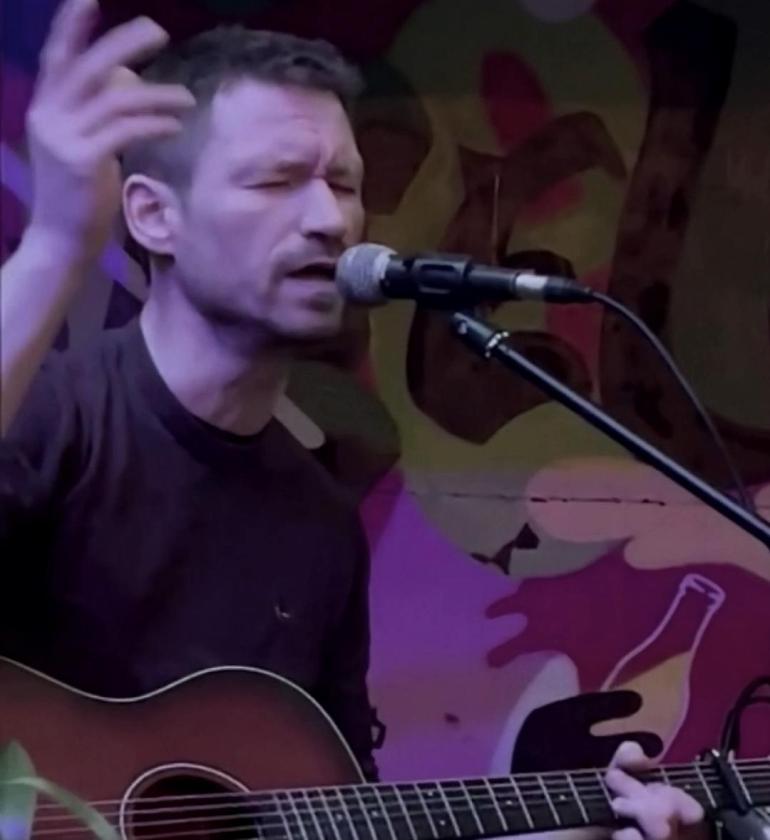
CC: You’ve recently played live for the first time in nearly a decade, why did you go back to live performances?
AMcM: “I had no plans to play live because my disorder gets in the way. Each time it’s a white-knuckle ride. It got to a point where I thought I could not reproduce live what I’d recorded on the last album, but it turned out I was playing guitar better and the vocal performances were in a different league so I thought I could pull off a really solid performance. It was great because I was back pushing myself and getting out of my comfort zone. I thought to myself, ‘I’m not going to do it unless I’m doing something different’ and it turned out really well. I’m just back from the rehearsal room this afternoon and I’m playing as well as I’ve ever done. Also, the reception the last LP received prompted me back to live performances”
CC: Sing Hosanaa, Sing The Salt (pictured below) is to my ear you most ambitious record to date, what can your fans expect from the next LP?
AMcM: “I already have half a record left over from the last one, but the new stuff is different and something I’ve yet to understand. I’m going to follow that and see where it goes. Part of me thinks it’ll be less dense. The songs that didn’t make it on to the last LP I’m going to put out for free, sort of eight songs or something.
“The next LP, I’m not sure where it’ll go or what it will sound like but I know it’ll be another progression and I know it’ll eventually make sense.”

Aaron McMullan’s current album Swing Hosanna, Sing The Salt and his entire back catalogue is available on http://www.bandcamp.com
Other songs are free to view on Youtube.com
I’ve bought everything he’s released and it’s all well worth a listen.
For updates from this page follow Culture Crush NI on Facebook.
ENDS
 CultureCrush NI