

By Conor O’Neill
Photography courtesy of Mark Douet
Adapted by Stephen Mallatratt from the novel by Susan Hill, The Woman In Black first thrilled and frightened the lights out of theatre goers way back in 1987, and judging by last night’s performance, it’s been doing the same ever since. It has ran in the West End for 33 years, no mean feat. And, now, here it is back in Belfast with more audiences to intrigue and shock
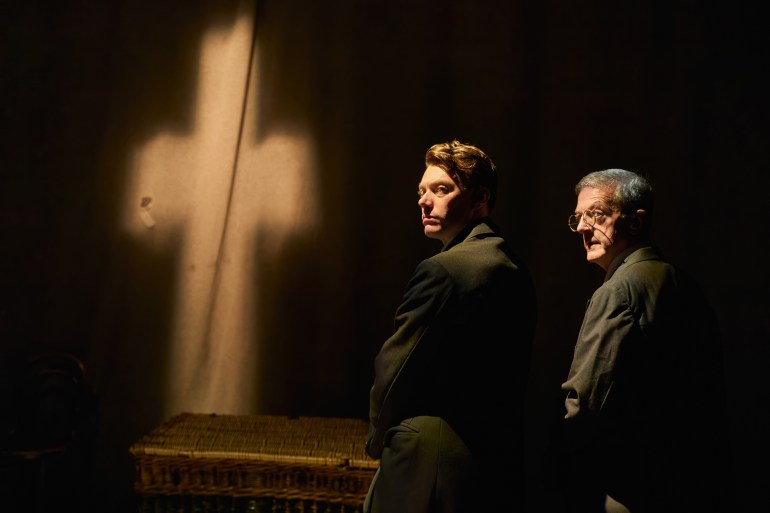
First off, it’s a slow burner: but heck, when it does kick in it’s an ultra audience inclusive and enchanting piece of theatre. Director Robin Hereford has been there since its stage debut and the man knows his stuff. Namely how to use as little props as is financially possible without losing the alluring plot, character changes, movements of location and leaps in decades and years with just two actors. I write two characters loosely, as I’m certain I know, I just know, I saw a woman in black.
The plot is that of a ghost story; apart from Shakespeare and Dickens’ A Christmas Carol what modern ghost story have you heard of in the recent past? I can think of none. My notes are conflicting, due to the super-low lighting of the theatre and the turning pages of my notebook annoying those seated near, my scribbles of the show are more or less useless. But in the memory I remember the thrill of being pushed back into you seat and leaning forward to hear every whispered piece of fine script.
1951, London, England, the set gives off vibes of Arthur Conan Doyle’s bustling streets, but there is business to be done. Solicitor Arthur Kipps is visited by and old man with a deathly white composure and wants to tell his tale.. The last will and testament sits heavy on both the actor’s hands and the watcher’s imagination. Young solicitor Arthur Kipps is sent to Eel Marsh House, out on a causeway, to settle the affairs of affairs of Alice Drablow. Kipps, played by Malcolm James, is a joy to watch. His verve and energy is startling.
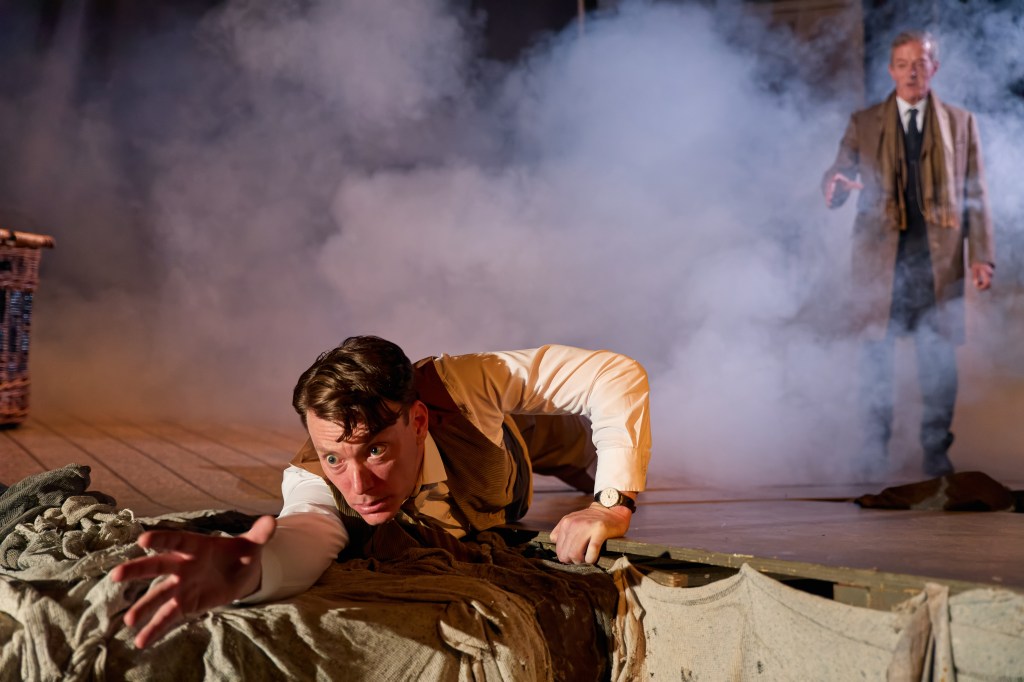
Note * There are simply too many characters for one to perform.
Mark Hawkins plays ,and I kid you not, the ‘Actor’. Hawkins skips character with abandon. With the austere set being brilliantly leaping from fog to dawn, driving rain, thunderstorms lets the viewer think… just that, think. Half of the attraction of this show is that we as viewers are as involved with this piece of theatre, as rare as it may happen.
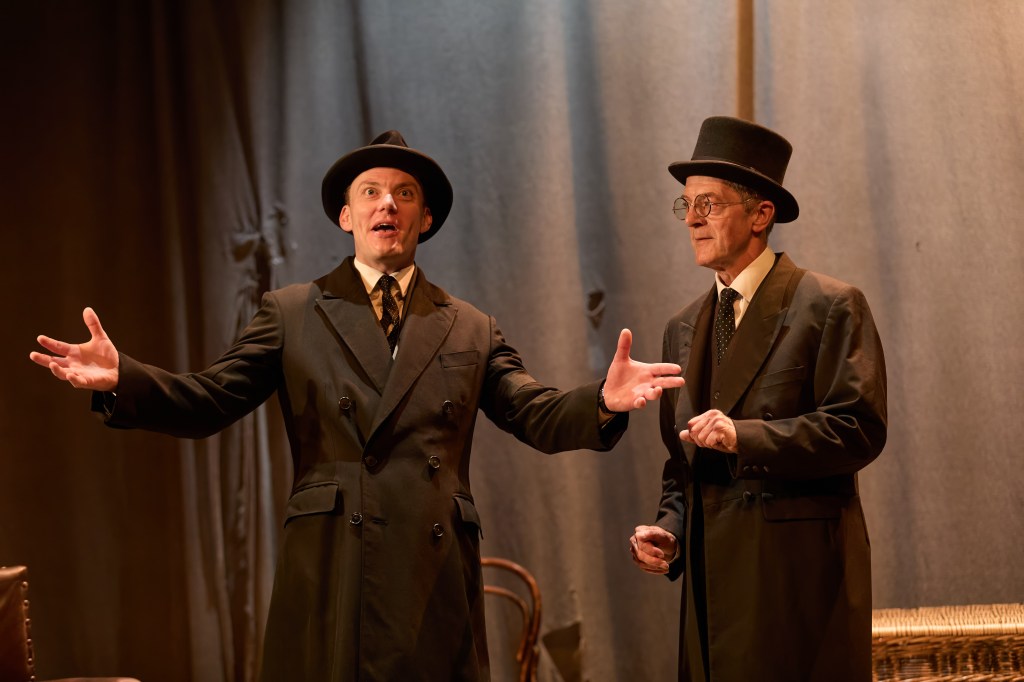
The set moves from the mainland to a tide dependent stretch of land hosting Eel Marsh House. The slow-burner is off. This where it gets exciting. 1951 to 1921, characters come and flow at will as Arthur Kipps gets tormented. None of this would be possible if it were not for the pair at skills with the lighting and sound. Kevin Sleep’s lighting brings us through dawns, dusks, lightening storms, spotlights, strobe lighting and a few I can’t describe. Coupled with that, add on Sound Designer Sebastian Frost with his sonic-scapes varying from the scuttling streets of London to the gales and gusts of Eel Marsh House, screams and more.

I expect you’re looking a nice, cosy little conclusion to this review? Well, unfortunately you’re not. It swerves from past to history to the future. I can’t wrap this in a tidy wee bundle and send it upon the waves. It’s so sharp it cuts its self. Brilliantly written, directed and performed. One to remember.
To book your tickets for The Woman In Black visit http://www.goh.co.uk or phone the box office on 02890 242419.
The Woman In Black runs up to and including Saturday May 18th.
ENDS
 CultureCrush NI